

If you’ve spent any time on BookTok or Bookstagram, you’ve probably seen readers gush over their favorite “smut” recommendations. But if you’re new to the term, it can sound confusing or even a little intimidating. So what is it called smut book meaning, in plain terms? It refers to fiction, most often romance, that features explicit sexual content as a central part of the story rather than something implied or skipped over.
This guide breaks down the full smut book meaning, where the term came from, how it differs from romance and erotica, and how to spot one before you pick it up. Whether you’re a curious new reader or just trying to understand what your favorite bookish creator keeps talking about, this article covers it all.
What Is a Smut Book?
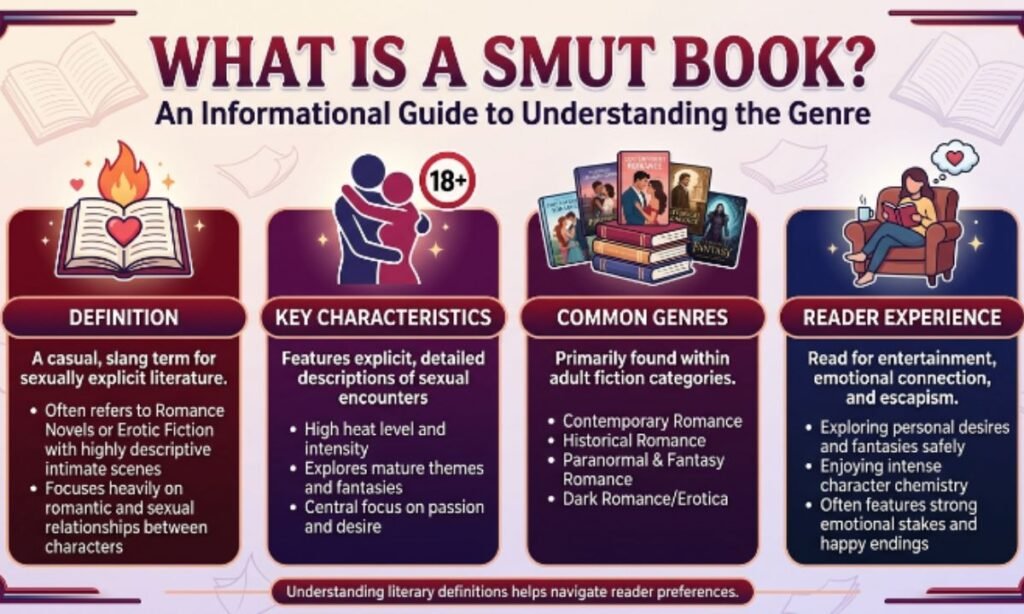
At its simplest, the smut book meaning describes a novel usually within the romance genre that includes detailed, graphic depictions of sex between characters. This is often called open-door writing, where nothing about the intimacy is left to the imagination. These scenes aren’t fade-to-black moments; they’re written out in full, often across multiple chapters, with heavy sensory detail woven into the prose.
Unlike a book that merely mentions intimacy in passing, a smut book puts physical desire front and center. The emotional relationship between characters can still matter, but the explicit scenes are a major draw for readers rather than a minor plot detail.
A Quick Working Definition
Put simply: a smut book is a story where explicit sexual content is a defining feature, not an afterthought. That’s the core of smut book meaning across nearly every reader community and bookseller glossary today.
Background / Origin
Understanding smut book meaning also means understanding where the word “smut” itself comes from. The term traces back to old Germanic roots referring to soot, stain, or dirt, entering Middle English with a similar sense of something corrupted or defiled. By the late 16th century, English speakers used “smut” to describe anything considered morally unclean, and by the 19th century, it had become shorthand for obscene or indecent material, particularly in print.
For a long time, “smut” carried a negative, almost shameful connotation. That’s shifted dramatically in recent years. Romance readers many of whom proudly call themselves “smut readers” have reclaimed the word, turning what was once an insult into a genre label people use with pride, humor, and a bit of a wink.
Key Characteristics of Smut Books
Not every steamy scene qualifies a book as smut. A few traits consistently show up across the genre:
- Sexually graphic content rather than implied or fade-to-black moments
- Frequency intimate scenes appear regularly throughout the book, not just once
- Emotional or physical focus built up specifically to lead into those scenes
- Sensory detail in how passionate encounters and chemistry between characters are described
- Genre flexibility smut can appear inside contemporary, fantasy, dark romance, or paranormal stories
- Reader-driven language, meaning tropes, spice levels, and heat levels are often discussed openly by the community
These characteristics are what most readers point to when trying to pin down smut book meaning in everyday conversation.
Smut Meaning in Books
Within literature specifically, smut meaning centers on how directly a story portrays sex. A book can touch on romance and attraction without qualifying as smut. What pushes it into that category is the level of graphic detail and how much narrative space is devoted to those scenes.
It’s also worth noting that smut meaning isn’t static. What one reader considers explicit, another might see as fairly tame. That’s why content and trigger warnings have become common practice among authors and reviewers in this space.
Smut Isn’t a Judgment on Quality
A common misconception is that smut equals poorly written fiction with little character development or plot development. In reality, plenty of smut books feature strong character growth, layered plots, and polished, provocative prose. Sexually graphic content and good storytelling aren’t mutually exclusive many smut titles balance intense romantic relationships with genuine emotional depth.
Smut Books Definition vs Smut Fiction Meaning
People sometimes use “smut books” and “smut fiction” interchangeably, but there’s a subtle distinction worth knowing.
| Term | What It Emphasizes |
| Smut books | The specific novels or titles known for explicit content |
| Smut fiction | The broader style or category of writing, across formats like novels, fan fiction, and short stories |
Both terms circle back to the same smut book meaning at their core explicit sexual content as a defining feature but “fiction” casts a slightly wider net that includes online writing communities like Wattpad and Archive of Our Own.
Smut Book Genre Explained
Smut isn’t technically a standalone genre in the traditional publishing sense it’s more of a content descriptor that gets layered onto existing genres. You’ll find smut inside:
- Contemporary romance – modern settings, relatable characters
- Dark romance – morally complex or intense dynamics
- Fantasy romance (“romantasy”) – magical worlds paired with steamy relationships
- Paranormal romance – supernatural characters and creatures
- Historical romance – period settings with explicit scenes woven in
This flexibility is a big part of smut book meaning it’s less about where a story is set and more about how explicitly it handles intimacy.
Examples
While preferences vary widely by reader, a few well-known patterns show up across popular smut and spicy-romance recommendations:
- Contemporary romance with workplace or friends-to-lovers tropes and multiple explicit scenes
- Fantasy romance series where world-building shares space with steamy relationship arcs
- Dark romance built around intense, high-tension dynamics between leads
Rather than naming specific titles, most readers rely on community tagging hashtags, heat-level charts, and trigger warnings on platforms like TikTok and Goodreads to find books matching their comfort level.
Smutty Books Meaning (What Makes a Book Smutty?)
“Smutty” functions as the adjective form of the term, and its meaning lines up closely with smut book meaning overall. A book earns the “smutty” label when:
- Sex scenes are frequent and described in vivid detail
- The narrative doesn’t shy away from physical description
- Intimacy plays a significant role in advancing the relationship or plot
Essentially, calling a book “smutty” is just a shorthand way of applying the smut book meaning to a specific title.
Spicy Books Meaning vs Smut Books
“Spicy” and “smut” get used interchangeably online, but there’s a nuance. “Spicy” often refers to a heat level a general measure of how sexually explicit a book is, usually ranked on a scale (like a pepper or flame icon system). “Smut,” meanwhile, typically implies the highest end of that scale.
| Term | Typical Meaning |
| Spicy | A scale describing how much heat/explicit content a book has, from mild to intense |
| Smut | Specifically refers to books at the more explicit, graphic end of that scale |
In short, all smut books are spicy, but not every spicy book qualifies as full smut.
Smut Books on TikTok
BookTok has played a massive role in popularizing smut book meaning for a whole new generation of readers. Creators openly recommend, review, and rate smut titles using heat-level scales, spoiler-free trope tags, and honest content warnings.
This visibility has done a few things:
- Normalized talking openly about explicit romance content
- Helped smaller and self-published authors reach large audiences
- Created shorthand terms (like “spice level” and “fade-to-black vs. open door”) that readers now expect on every recommendation
TikTok’s influence is a major reason searches around smut book meaning have grown so quickly in recent years.
Difference Between Smut and Romance
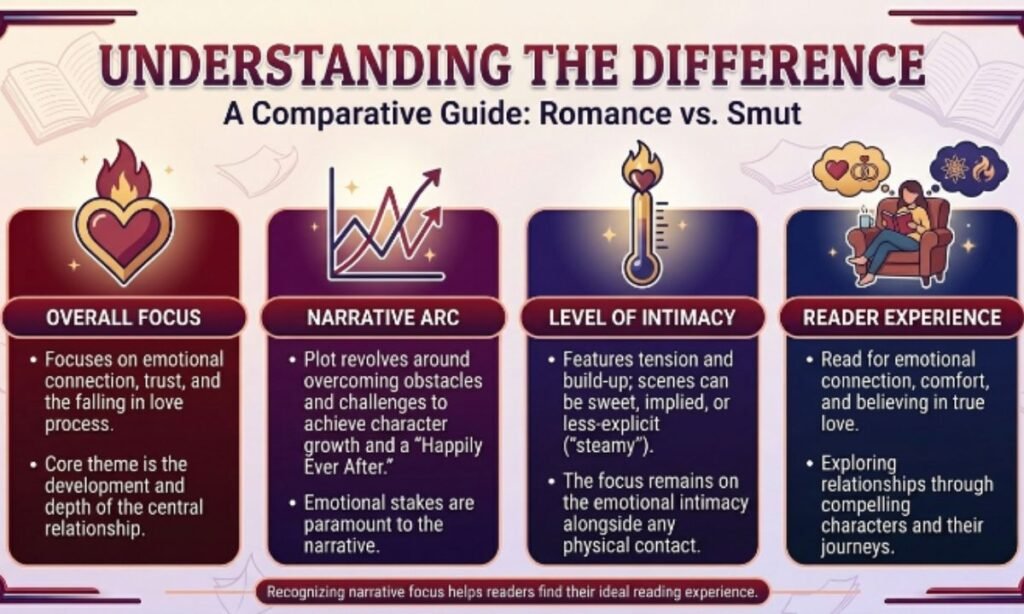
This is one of the most common points of confusion, and it’s central to understanding smut book meaning correctly.
- Romance centers on emotional connection, character growth, and typically ends with a happily-ever-after. Sexual content, if included, may be minimal or implied.
- Smut centers on physical desire and explicit intimacy, often with less emphasis on a slow-building emotional arc or guaranteed happy ending.
There’s plenty of overlap many books are both romance and smut at once but the defining difference comes down to focus: emotional storyline versus explicit content as the main draw.
How Erotica Fits In
Erotica is a related but distinct term. While smut usually keeps a relationship or romantic arc central to the story, erotica can focus purely on the sexual content itself, without needing a broader romantic plot to hold it together.
Is a Smut Book Appropriate?
Whether a smut book is “appropriate” depends entirely on the reader and the context. As a category of adult fiction meant for grown readers, a few points are worth considering:
- Age-appropriateness: Smut books are written for adult audiences due to explicit content.
- Personal comfort: Some readers enjoy explicit detail; others prefer implied or fade-to-black scenes, and that’s a matter of personal taste, not right or wrong.
- Content warnings: Reputable smut authors and platforms often flag topics like violence, power dynamics, or specific triggers so readers can make informed choices.
Because smut book meaning centers on explicit adult content, it’s generally not intended for younger or underage readers.
Smut Book Slang Meaning
Beyond formal definitions, “smut” also functions as casual slang within reader communities. People use it affectionately “I need some good smut recommendations” or “this book was pure smut” without any of the negative baggage the word once carried.
In slang usage, smut book meaning has essentially become a badge of genre pride rather than a criticism, reflecting just how much the term has been reclaimed by the romance reading community.
Frequently Asked Questions
What does “smut” mean in a book?
“Smut” refers to fiction, typically romance, that includes explicit and detailed sexual content as a central part of the story rather than an implied or minor detail.
Is smut the same as erotica?
Not exactly. Smut usually keeps a romantic relationship central to the plot, while erotica can focus purely on sexual content without needing a full romance arc.
What’s the difference between smut and spicy books?
“Spicy” describes a general heat-level scale for how explicit a book is, while “smut” typically refers to books at the highest, most explicit end of that scale.
Are smut books just romance novels?
Not always. While many smut books fall under romance, the label can apply across genres like fantasy, dark romance, and paranormal fiction, as long as explicit content plays a central role.
Conclusion
So, what does a smut book mean at the end of the day? It’s fiction most often romance that puts explicit, detailed sexual content front and center rather than treating it as a minor or implied detail. Once considered a negative term, “smut” has been reclaimed by readers and creators as a proud genre label, especially thanks to communities on TikTok and Goodreads. Whether you’re new to the term or just want a clearer definition, understanding smut book meaning makes it much easier to find or avoid exactly the kind of story you’re looking for.